

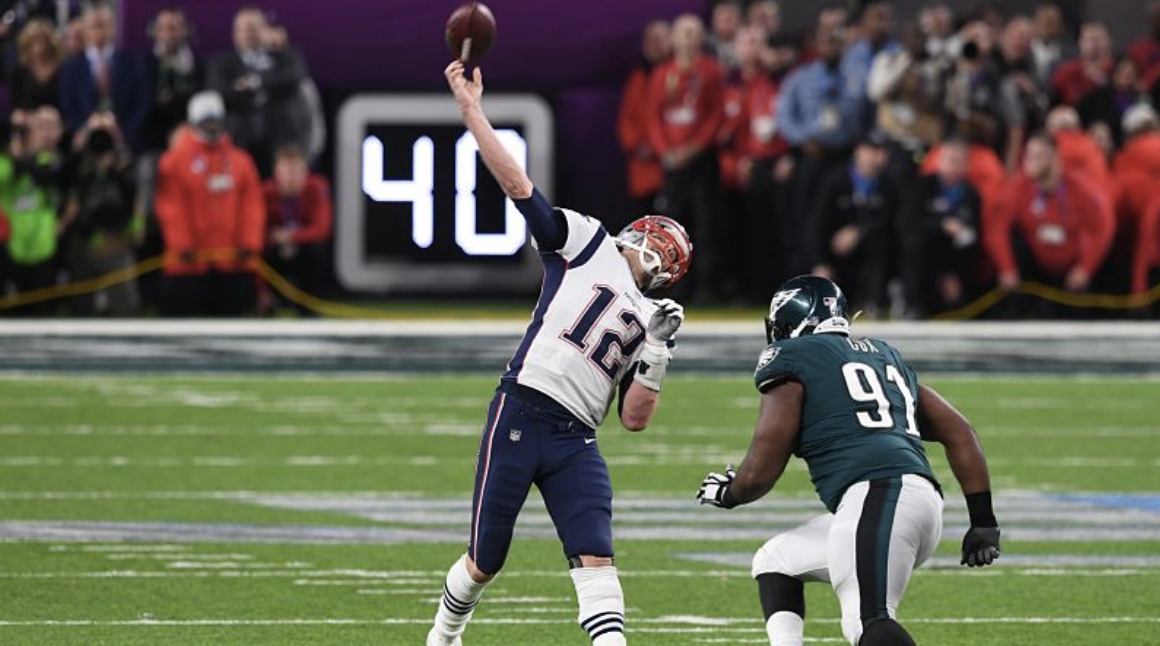
Warning: Here comes an advertising/Super Bowl analogy from a Brit.
Every February, the advertising industry suits up to watch a series of $8 million Hail Marys.
A brand takes a massive bet on a single 30-second window. They hire an A-list celebrity, license a nostalgic 80s track and pray that this one touchdown will carry their entire year. Risky business.
But as any coach will tell you, you don’t build a team dynasty on Hail Marys. You build it on the ground game. A hard yard progression that builds a legacy when the cameras aren’t zoomed in on the end zone.
OK, that’s where I reach the end of my American Football knowledge, but you see the point. There is an imbalance of marketing (and journalistic, dare I say) effort around the match day ads vs the wider media ecosystem and how that contributes to brand growth. Advertising has been evolving into ‘Lots of Littles’ for a long time, yet somehow in the Super Bowl hype that gets forgotten.
Twenty Twenty Poor
Here at DAIVID, every year we assess all of the Gig Game advertisers’ TV ads plus their social media content and bolt-ons for creative effectiveness. About 700 ads in 2025, up from 500 in 2024. It’s a window into the real world: omnichannel effectiveness of a brand’s Super Bowl campaign, rather than just looking at the eye-wateringly expensive Hail Mary TVC.
As a former social media guy, in 2024 I was struck by the, frankly, poor social media support for the big TV plays. We noticed that poor effectiveness scores on the social media support pieces were down to a few factors:
>>Social was an afterthought. Edits cut for social were either not cut at all, disregarding the environment or done so in a way which left viewers confused. Social viewers may not have seen the TVC, so they weren’t in on the story.
>> Given posting organically is free, you’d think there might be a bit more ‘Tease, trend, extend’ of the campaign. Nope.
>> There was a lack of commitment to the idea across media. Many of the TVCs were highly effective, but the silos showed a lack of creative commitment in other media.
>> A notable lack of use of creators to augment the TVCs.
See what we did with Twenty Twenty Poor? Funny right? Was it Twenty Twenty Thrive? (That’s 2025). Keep up at the back there.
Better. But still sloppy. Unbelievably, three of the 60+ advertisers on TV posted NOTHING on social. Yellow flag for such a heinous infraction from these brands.
However, across the board there was more social creative, over more time, more media linkage and more clever use of creators to construct a campaign idea which travelled. Putting in some yards at last.
T-Mobile sent creators far and wide to support their Starlink spot. Cirkul teed up and augmented their 100,000 starter kits giveaway via social. Plus, showing considered use of social, Dunkin, Ritz and Hexclad hustled some merch/product sales.
Still, though, in the highly scientific ‘Barney interesting-o-meter’, only 17% of advertisers did any meaningful extension of their campaign into social.
TV Tunnel Vision
So, shouldn’t we as an industry encourage more holistic coverage of how brands grow from their Super Bowl media investment, not just the TVC. It’ll also help focus marketers on the real world of many ads in many places, collectively contributing to the brand’s successful Super Bowl campaign.
Everyone knows the $8m figure for 30 seconds of TV time to reach the 127m viewers – but just to put this in context: that would essentially buy you ownership of the media on TikTok for a week. Globally.
And as the celebs agents start to rub their hands with glee, some influencer agencies last year were touting 7:1 ROI for Super Bowl influencer campaigns. So consider then, that one $3m Matt Damon = 40 creators with 1m+ followers. I’m sure I could do some damage with that and a decent creative idea.
Also, last year, such was the TV bidding frenzy that rates on TikTok dropped. Brands were able to reach one person for approx 8% of the price of reaching one person on TV.
I’ve focused on social here, but also what about search, OOH, experiential and the new darling of retail media? Don’t get me wrong, we all know How Brands Grow, reaching new and light customers in the biggest appointment to view shindig of the year. But there is an emphasis gap that defies common sense.
Will it be the year it TwentyTwentyClicks?
It looks like it. We’re already capturing a lot of social content from advertisers who have learned the value of ‘Tease, Trend, Extend’ with their campaign ideas. Set against a backdrop of an industry that is slowly reducing its focus on the ONE BIG AD in the age of AI and channel abundance.
In retail and social shoppable, Dunkin’ and Grubhub are helping growth in those channels this year with some interesting looking ‘instant win’ mechanics.
Meanwhile, at the creator ranch, for good or ill, Salesforce has handed over the keys to MrBeast for its Super Bowl campaign. Svedka Vodka has also already started a campaign that will draw lots of creator content to offset their AI ad star. So we can hope the ‘Interesting-o-meter’ is going to beat 17% of campaigns last year.